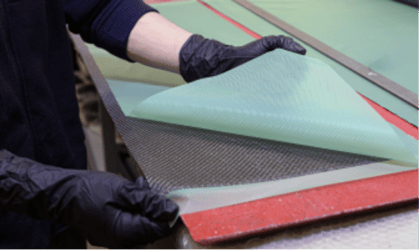
Structural bonding plays a vital role in modern aircraft manufacturing, where engineering teams must constantly balance strength, weight, durability, and production efficiency across metal and composite assemblies.
Unlike mechanical fasteners, which concentrate structural stress around individual hole locations, structural adhesives distribute mechanical loads evenly across the entire bonded area. Shifting to adhesive bonding reduces total fastener count, optimizes structural integrity, and enables lightweight designs across fuselages, wing structures, cabin interiors, and composite subassemblies.
However, choosing an aerospace structural adhesive involves far more than comparing ultimate shear strengths on a technical datasheet. The substrate, bond design, cure profile, operating environment, surface prep, and qualification specifications all work together to dictate the overall performance of the bonding system.
What Is a Structural Bonding System?
It can be easy to view the adhesive as the complete solution. In practice, the resin is only one piece of a broader engineering system.
A reliable structural bond relies on several materials and process controls working in harmony:
- The Substrate: Aluminum, titanium, composite laminates, or honeycomb structures.
- Surface Preparation / Pretreatment: Solvent cleaning, mechanical abrasion, chemical etching, or conversion coatings.
- Bond Primers: Corrosion-inhibiting or adhesion-promoting primers.
- The Structural Adhesive: Liquid pastes, syntactics, or supported/unsupported film adhesives.
- Application & Cure Controls: Temperature ramps, dwell times, vacuum/autoclave pressure, and bond-line thickness management.
Each element directly impacts the long-term mechanical strength and fatigue resistance of the finished bond. This is especially true in aerospace manufacturing, where the same core adhesive chemistry may require completely different handling when bonding aluminum versus carbon fiber or honeycomb sandwich panels.
Paste vs. Film Adhesives: Key Differences
One of the first decisions in material selection is choosing the adhesive format:
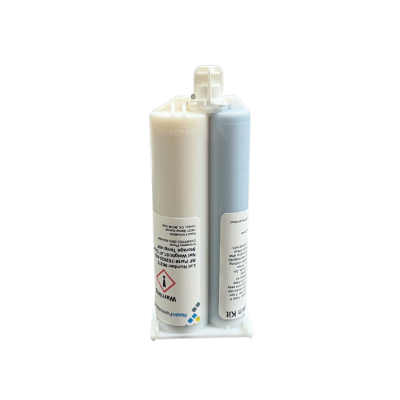 Epoxy Paste Adhesives
Two-part epoxy systems support both metal-to-metal and composite bonding across complex bond geometries. Their thixotropic consistency makes them ideal for gap filling, edge sealing, and controlled manual or automated dispensing. Depending on the system, paste adhesives can be engineered for room-temperature cures or elevated-temperature post-cures.
Examples include: Resin Formulators RF 6110 A/B, LOCTITE® EA 9394™ AERO, and LOCTITE® EA 9396™ A/B AERO.
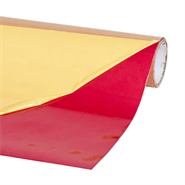 Structural Film Adhesives
Film adhesives deliver a pre-catalyzed adhesive layer supported on a carrier web or unsupported roll. They are widely specified for structural composite laminates and honeycomb panel bonding.
Examples include: 3M™ Scotch-Weld™ AF 163-2K and Syensqo FM 377S
The material choice depends on shop-floor processing capabilities and OEM specifications.
Start With Your Application Requirements
Adhesive selection should always begin with the operational demands of the final assembly.
Before narrowing down material choices, aerospace engineers should evaluate operating temperatures, fluid resistance, structural load limits, substrate combinations, and manufacturing constraints.
For example, a high-temperature film adhesive designed for large composite panels may not provide the flow profile needed for a small, complex metal fitting. Similarly, an adhesive's required cure schedule must align with the tooling, thermal equipment, and cycle-time constraints available on your shop floor. Evaluating technical properties within the context of your complete process prevents costly manufacturing bottlenecks.
Consider Substrate Interactions
The bonded materials are just as critical as the adhesive itself.
Aluminum, titanium, carbon fiber composites, and core materials present vastly different surface energies, CTEs (coefficients of thermal expansion), and corrosion profiles.
Mixed-material bonds require extra attention because dissimilar materials expand and contract at different rates under thermal stress. Identifying these substrate dynamics early helps narrow adhesive options and establishes the correct surface preparation protocols.
Surface Preparation Is Part of the System
Even the highest-performing structural adhesive can experience disbond if applied to an improperly prepared surface.
Microscopic contamination, improper solvent wiping, inadequate surface energy, or unmonitored delays between surface prep and bonding directly compromise bond integrity. For metal-to-metal bonding, applying a corrosion-inhibiting bond primer protects long-term durability under harsh environmental conditions.
Evaluate Cure and Manufacturing Constraints
Cure temperature profiles and cycle times directly affect tooling selection, oven/autoclave availability, throughput, and energy costs. Pot life, working life, and viscosity profiles also dictate whether a material can be consistently applied without introducing voids or misaligned parts.
For cold-storage materials like film adhesives, managing thaw cycles, cleanroom staging time, and out-life tracking introduces additional shop-floor controls. Addressing these processing parameters during material selection bridges the gap between engineering design and practical floor execution.