---
title: How RF 5407 Solved a Critical Material Challenge in High-Voltage EV Charging
description: Learn how Resin Formulators provided RF 5407 as a hermetic seal and thermal management solution for a 1,000-amp EV charging contactor relay, now a qualified production material.
image: https://blog.gracoroberts.com/hubfs/Blog%20Success%20Story%20%231%20EVs%20(1).png
---
[](https://www.gracoroberts.com/)
Search
[Sign In / Register Account And Quick Order](https://www.gracoroberts.com/account/)
New Customer? [Create an Account](https://www.gracoroberts.com/login/?redirectto=/register/)
**My Account** [Sign In](https://www.gracoroberts.com/login/?redirectto=/account/)
[Orders](https://www.gracoroberts.com/my-account/transaction-history/) [Documentation](https://www.gracoroberts.com/my-account/documentation/) [Ordering Tools](https://www.gracoroberts.com/my-account/order-tools/) [Account Management](https://www.gracoroberts.com/my-account/options/)
[0 Cart](https://www.gracoroberts.com/cart/)
Shop all Products Shop by Products
Shop all Products
[Accessories](https://www.gracoroberts.com/accessories/) [Adhesives](https://www.gracoroberts.com/adhesives/) [Cleaners](https://www.gracoroberts.com/cleaners/) [Coatings](https://www.gracoroberts.com/paints-coatings/) [Composites](https://www.gracoroberts.com/aerospace-composites/) [Epoxy Resins](https://www.gracoroberts.com/epoxy-resins/) [Aerospace Lubricants](https://www.gracoroberts.com/lubricants/) [Sealants](https://www.gracoroberts.com/sealants/) [Silicones](https://www.gracoroberts.com/silicones/) [Specialties](https://www.gracoroberts.com/specialties/) [Tapes](https://www.gracoroberts.com/tapes/)
Shop by Brand
Shop by Brand
[View all brands](https://www.gracoroberts.com/brands/) [3M](https://www.gracoroberts.com/brands/3m/) [AeroShell](https://www.gracoroberts.com/brands/aeroshell/) [AkzoNobel](https://www.gracoroberts.com/brands/akzonobel/) [Castrol](https://www.gracoroberts.com/brands/castrol/) [Eastman](https://www.gracoroberts.com/brands/eastman/) [Henkel](https://www.gracoroberts.com/brands/henkel/) [Huntsman](https://www.gracoroberts.com/brands/huntsman/) [Momentive](https://www.gracoroberts.com/brands/momentive/)
Services
Services
[Distribution](https://www.gracoroberts.com/services/distribution/) [Vendor Managed Inventory](https://www.gracoroberts.com/services/vmi/) [Specialty Packaging](https://www.gracoroberts.com/services/specialty-packaging/) [Short Roll Composites](https://www.gracoroberts.com/services/short-roll-composites/)
[Intermix Paint Services](https://www.gracoroberts.com/services/intermix-paint-services/) [Defense Logistics & Compliance](https://www.gracoroberts.com/services/defense-logistics-compliance/) [Custom Formulation](https://www.gracoroberts.com/services/custom-formulations/) [Advanced Lab Testing](https://www.gracoroberts.com/brands/resin-formulators/advanced-testing-services/advanced-material-lab-testing/)
Help & Resources
Help & Resources
[Help Center](https://help.gracoroberts.com/help-center) [Expertise](https://www.gracoroberts.com/resources/expertise/) [Knowledge Blog](https://blog.gracoroberts.com) [Supply Chain Knowledge Center](https://landing.gracoroberts.com/supply-chain-disruption-news) [Events](https://www.gracoroberts.com/news/2026-events/)
[Contact Us](https://www.gracoroberts.com/contact/) [Solutions Library](https://landing.gracoroberts.com/solutions-library) [Certifications](https://www.gracoroberts.com/resources/certifications/) [News](https://www.gracoroberts.com/news/) [Shelf Life Calculator](https://www.gracoroberts.com/resources/shelf-life-calculator/)
[Sign In](https://www.gracoroberts.com/login/?redirectto=/login/)
[Skip to content](https://blog.gracoroberts.com/how-rf-5407-solved-a-critical-material-challenge-in-high-voltage-ev-charging#main-content)
[All posts](https://blog.gracoroberts.com/all)
September 16, 2026
# How RF 5407 Solved a Critical Material Challenge in High-Voltage EV Charging
 By [Resin Formulators](https://blog.gracoroberts.com/author/resin-formulators) · 4 minute read
The push for faster electric vehicle charging is placing new demands on every component inside a charging system. When current levels double and heat generation follows, the materials that hold these devices together need to perform in ways that off-the-shelf solutions simply cannot.
This is the story of how [Resin Formulators](https://www.gracoroberts.com/brands/resin-formulators/) partnered with an EV component manufacturer to provide [RF 5407](https://www.gracoroberts.com/adhesives/resin-formulators-5407-epoxy-resin-1-gal-can/), a purpose-engineered epoxy that solved a dual thermal and sealing challenge inside a next-generation high-voltage contactor relay.
### **The Challenge: A 1,000-Amp Contactor That No Standard Material Could Support**
An electric vehicle component manufacturer was developing a new high-voltage direct contactor relay designed for use in rapid EV charging stations. While standard contactor relays are rated for 500 amps, this new unit needed to handle 1,000 amps, effectively doubling the current capacity of the device.
Operating at that level creates a significant heat problem. Higher frequency currents in a high-voltage direct contactor generate substantially more thermal energy than conventional relays. That heat had to go somewhere, and the material enclosing and interfacing with the relay's surface would need to manage it reliably across the full operating cycle of a rapid charging station.
At the same time, the internal components of the relay required hermetic sealing to protect them from environmental exposure over the life of the device. To understand why hermetic sealing is a critical consideration in EV applications, see our overview of [hermetic sealing advantages for electric vehicles](https://www.gracoroberts.com/brands/resin-formulators/thermal-management/Hermetic-Sealing-Advantages-for-Electric-Vehicles/).
The manufacturer needed a single material that could do both: seal the relay hermetically and serve as the thermal interface between the relay surface and the surrounding assembly. No existing qualified material met both requirements at the temperatures involved.
For a broader look at how advanced polymer materials are enabling EV technology, visit our[electric vehicle materials page](https://www.gracoroberts.com/electric-vehicle-materials/).
### **The Solution: RF 5407 as a Dual-Function Hermetic Seal and Thermal Interface**
### 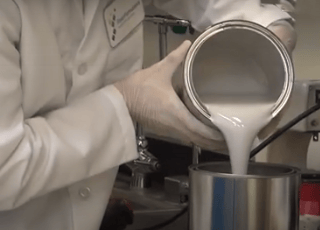 After a thorough review of the application requirements, the Resin Formulators team identified RF 5407 as the solution. Rather than requiring two separate materials for sealing and thermal management, RF 5407 was validated to perform both functions within the same assembly.
RF 5407 delivered the following for this application:
**Hermetic Sealing Performance**
RF 5407 provided a reliable environmental barrier for the relay's internal components, protecting them from moisture, contamination, and the mechanical stresses of repeated charging cycles.
**Thermal Management at Elevated Temperatures**
The material served as the interface between the relay surface and the surrounding assembly, efficiently conducting and dissipating the heat generated during 1,000-amp transmission.
**Qualification Compatibility**
RF 5407 was able to meet the qualification requirements for the manufacturer's device, allowing the product to move from development into production as a qualified material.
The result was measurably improved power transmission through the relay. The device could now handle the thermal demands of rapid EV charging without relying on multiple materials or complex assembly steps. This kind of application-specific formulation is central to how the Resin Formulators team approaches unique engineering problems.
### **The Outcome: A Qualified Material for Next-Generation EV Infrastructure**
RF 5407 is now a qualified material for the manufacturer's high-voltage contactor unit. The device is in production and contributing to the buildout of rapid EV charging infrastructure, the kind of hardware that makes long-distance EV travel and high-throughput charging networks possible.
The success of this project came down to a few factors that are worth highlighting for any engineer or procurement professional working on similar challenges:
**Dual-function materials reduce assembly complexity.** When one material can perform two roles, the manufacturing process becomes simpler, more consistent, and less prone to interface-related failure modes.
**Qualification matters more than data sheets.** RF 5407 did not just perform in testing. It earned qualification status for the device, which means it is approved for use in a fielded product with real-world reliability expectations behind it.
**Early collaboration with a formulator accelerates timelines.** Bringing the materials challenge to Resin Formulators during the design phase, rather than after a prototype failure, meant the solution could be developed and qualified without delaying the manufacturer's production schedule.
### **What This Means for EV and Power Electronics Manufacturers**
If you are developing components for EV charging systems, high-voltage power distribution, or thermal-critical electronics, material selection is often the variable that determines whether a design qualifies for production or stays in development.
Resin Formulators has been solving materials challenges across advanced manufacturing industries for over 60 years. The team works directly with engineers and product teams to develop custom epoxy and polymer solutions when existing products fall short. That includes [thermal interface materials](https://www.gracoroberts.com/electronics-adhesives-coatings/), [structural adhesives,](https://www.gracoroberts.com/adhesives/) hermetic sealants, and electrically conductive systems for demanding applications.
Whether you are in early design or facing a qualification bottleneck, the right formulation partner can make a significant difference in how quickly and confidently you move from prototype to production.
[Contact the Resin Formulators team](https://www.gracoroberts.com/brands/resin-formulators/technical-support/consultation-request/) to discuss your application requirements and learn how Resin Formulators can support your next development program. For more examples of Resin Formulators solving complex materials challenges,[download the RF success stories brochure](https://www.gracoroberts.com/Documents/RF/2024/RF-Success%20Stories.pdf).
### **Frequently Asked Questions**
**What is RF 5407?**RF 5407 is a custom epoxy formulation developed by Resin Formulators to serve as both a hermetic seal and a thermal management interface material. It was developed specifically to meet the performance requirements of a 1,000-amp high-voltage direct contactor relay used in rapid EV charging stations.
**What makes RF 5407 suitable for high-voltage EV charging applications?**RF 5407 was formulated to withstand the elevated temperatures generated during high-frequency, high-voltage current transmission. It provides reliable hermetic sealing and thermal conductivity in a single material, simplifying assembly and reducing potential failure points.
**How does Resin Formulators develop custom epoxy solutions?**The Resin Formulators team works directly with customer engineering teams to understand application-specific requirements. From there, a formulation development process is initiated that targets the specific performance, processing, and qualification needs of the application. Learn more at our[custom formulations page](https://www.gracoroberts.com/services/custom-formulations/).
**Can Resin Formulators support qualification requirements for aerospace or EV programs?** Yes. Resin Formulators has experience supporting qualification programs across [military](https://www.gracoroberts.com/services/defense-logistics-compliance/), commercial aerospace, satellite, and [automotive applications](https://www.gracoroberts.com/automotive-adhesives-sealants/). RF 5407 is now a qualified material for a commercial EV charging device.
[Explore Resin Formulators’ Epoxy Solutions](https://www.gracoroberts.com/search-results/?Brand=Resin-Formulators&interaction=1)
[envelope icon](mailto:?body=https://blog.gracoroberts.com/how-rf-5407-solved-a-critical-material-challenge-in-high-voltage-ev-charging)
## Related posts
[](https://blog.gracoroberts.com/custom-satellite-panel-edge-filling-epoxy)
[Case Studies](https://blog.gracoroberts.com/topic/case-studies)
### [How RF 1164 A/B Solved a High-Temperature Edge Filling Challenge for Satellite Panel Production](https://blog.gracoroberts.com/custom-satellite-panel-edge-filling-epoxy)
[.png)](https://blog.gracoroberts.com/high-tg-epoxy-validation-checklist)
[Testing & Validation](https://blog.gracoroberts.com/topic/testing-validation)
### [High-Tg Epoxy Validation Checklist for Aerospace Bonding](https://blog.gracoroberts.com/high-tg-epoxy-validation-checklist)
[](https://blog.gracoroberts.com/silver-filled-epoxy-electrical-component-design)
[Electronics](https://blog.gracoroberts.com/topic/electronics)
### [How RF 2969 Delivered a Cost-Effective Silver-Filled Epoxy for Modern Electrical Component Design](https://blog.gracoroberts.com/silver-filled-epoxy-electrical-component-design)
### GracoRoberts.com
3200 Avenue E East
Arlington, TX
76011-5231
AOG Line: [+1 817-759-8499](tel:+18177598499)
[info@gracoroberts.com](mailto:info@gracoroberts.com)
### Company
- [About Us](https://www.gracoroberts.com/about/)
- [Contact Us](https://www.gracoroberts.com/contact/)
- [Locations](https://www.gracoroberts.com/about/locations/)
- [Services](https://www.gracoroberts.com/services/)
- [Careers](https://www.gracoroberts.com/about/careers/)
- [Advertising Terms](https://www.gracoroberts.com/about/advertising-terms/)
- [Events](https://www.gracoroberts.com/news/2026-events/)
### Customer Service
- [My Account](https://www.gracoroberts.com/my-account/)
- [My Orders](https://www.gracoroberts.com/my-account/transaction-history/)
- [Customer Terms & Conditions](https://www.gracoroberts.com/about/customer-terms/)
- [Vendor Terms & Conditions](https://www.gracoroberts.com/about/vendor-terms/)
- [Privacy Policy](https://www.gracoroberts.com/about/privacy-policy/)
### Connect
- [](https://www.facebook.com/GracoRoberts)
- [](https://www.linkedin.com/company/gracoroberts/)
- [](https://x.com/GracoRoberts)
- [](https://www.instagram.com/gracoroberts/)
### Shop Securely

### Get the Latest News
Subscribe
By submitting your details, you agree to our [Terms & Conditions](https://www.gracoroberts.com/about/customer-terms/) and
understand our [Privacy Policy](https://www.gracoroberts.com/about/privacy-policy/)
[Customer Terms & Conditions](https://www.gracoroberts.com/about/customer-terms/) | [Vendor Terms & Conditions](https://www.gracoroberts.com/about/vendor-terms/) | [Privacy Policy](https://www.gracoroberts.com/about/privacy-policy/)  EN
© GracoRoberts 2026 | [ecommerce by red](https://www.redtechnology.com)
×
Newsletter Sign Up
```json
{
"@context" : "https://schema.org",
"@type" : "FAQPage",
"mainEntity" : [ {
"@type" : "Question",
"acceptedAnswer" : {
"@type" : "Answer",
"text" : "RF 5407 is a custom epoxy formulation developed by Resin Formulators to serve as both a hermetic seal and a thermal management interface material. It was developed specifically to meet the performance requirements of a 1,000-amp high-voltage direct contactor relay used in rapid EV charging stations."
},
"name" : "What is RF 5407?"
}, {
"@type" : "Question",
"acceptedAnswer" : {
"@type" : "Answer",
"text" : "RF 5407 was formulated to withstand the elevated temperatures generated during high-frequency, high-voltage current transmission. It provides reliable hermetic sealing and thermal conductivity in a single material, simplifying assembly and reducing potential failure points."
},
"name" : "What makes RF 5407 suitable for high-voltage EV charging applications?"
}, {
"@type" : "Question",
"acceptedAnswer" : {
"@type" : "Answer",
"text" : "The Resin Formulators team works directly with customer engineering teams to understand application-specific requirements. From there, a formulation development process is initiated that targets the specific performance, processing, and qualification needs of the application."
},
"name" : "How does Resin Formulators develop custom epoxy solutions?"
}, {
"@type" : "Question",
"acceptedAnswer" : {
"@type" : "Answer",
"text" : "Yes. Resin Formulators has experience supporting qualification programs across military, commercial aerospace, satellite, and automotive applications. RF 5407 is now a qualified material for a commercial EV charging device."
},
"name" : "Can Resin Formulators support qualification requirements for aerospace or EV programs?"
} ]
}
```
```json
{
"@context" : "http://schema.org",
"@type" : "Article",
"author" : {
"@type" : "Person",
"name" : [ "Resin Formulators" ],
"url" : "https://blog.gracoroberts.com/author/resin-formulators"
},
"datePublished" : "2026-04-16T17:20:45+0000",
"description" : "Learn how Resin Formulators provided RF 5407 as a hermetic seal and thermal management solution for a 1,000-amp EV charging contactor relay, now a qualified production material.",
"headline" : "How RF 5407 Solved a Critical Material Challenge in High-Voltage EV Charging",
"image" : "https://2450241.fs1.hubspotusercontent-na1.net/hubfs/2450241/Blog%20Success%20Story%20%231%20EVs%20%281%29.png",
"publisher" : {
"@type" : "Organization",
"logo" : {
"@type" : "ImageObject",
"url" : "https://2450241.fs1.hubspotusercontent-na1.net/hubfs/2450241/GracoRoberts-Logo-CMYK.png"
},
"name" : "GracoRoberts"
},
"url" : "https://blog.gracoroberts.com/how-rf-5407-solved-a-critical-material-challenge-in-high-voltage-ev-charging"
}
```